Being gifted, 2e and in relationship within groups
Feeling the energy of the group, entering a conversation, staying in one when it gets uncomfortable. Not scripts to perform, we practice, with non judgmental feedback that you can use.

Programs
Small, ongoing groups and dyads at the farm for gifted and twice-exceptional kids, teens, and adults as a place to practice being fully yourself and fully with other people, practice expressing anger and other emotions, being in conflict, setting boundaries and all the many aspects of being in relationship within a group.
Free 15-minute consultation
A group is a great opportunity to practice relationships in an emotionally safe environment. You can try something different on the spot and find out what it does.
For gifted and 2e people, the difficulty is often that being sensitive makes it hard to connect without picking up the mood of everybody present and leave carrying it, so it is easier to avoid groups because it is exhausting. It can look like shyness or social anxiety and is neither. One of the topics we work on in a group is how to feel your own signal and learn to build a process to self-protect and not keep everybody's energy and feelings.
Feeling the energy of the group, entering a conversation, staying in one when it gets uncomfortable. Not scripts to perform, we practice, with non judgmental feedback that you can use.
What happens inside you when someone disagrees, interrupts, gets it wrong, or walks away. Conflicts happen in any group or life situation. the more we practice the better we get at being in conflict and the less we get triggered when they happen
Boundaries are very personal and often connected to what is important to us. We explore the multiple levels of our own boundaries, how to set them, enforce them and how boundaries inform us about our self-confidence.
Groups are formed by age or life stage, and fit. We decide together what the best group is depending on fit and schedule.
the dyads are formed by age and developmental stage. The group meets in person at the farm. Weekly or bi-weekly running all year. (note: biweekly groups are typically paired with individual work on the off week)
Six to eight adults. In person at the farm or online. Weekly or bi-weekly, running all year. We meet in person at the farm or online. (note: biweekly groups are typically paired with individual work on the off week)
Groups are ongoing all year long. You can join and leave at any time with proper notice for leaving and a minimum participation of 4 weeks.
Groups and pairs run continuously (rather than in fixed duration). I've found six or eight sessions is barely enough time to settle in, let alone to deepen their work in a meaningful way. However, in order to preserve the integrity of the group i ask that participants attend a minimum number of sessions and provide a number of sessions notice when leaving the group.
There's no single trial session. A group changes shape every time someone new walks in, so a one-off visit tells you very little and disrupts the group dynamics. I prefer that people who join, commit to a minimum number of sessions so that they have a chance to feel part of the group, and the group has a chance to integrate the new participant(s). Along the same lines I ask that participants give a minimum number of notice sessions before they leave the group.
Depending on the group we meet in person or online weekly or bi-weekly year-round. Breaks are decided within the group, typically holidays are decided in advance. Consistent participation is required. Four absences a year for travel, illness, and the things that come up. There is a 24-hour cancellation policy.
For gifted and 2e people, large groups are typically overwhelming, so groups sizes are capped so that the work can stay meaningful, but large enough so that people can practice working through the potential overwhelming feelings that come up in groups
We start with an intake session to make sure the group format is the right fit and to decide together what type of group to join.
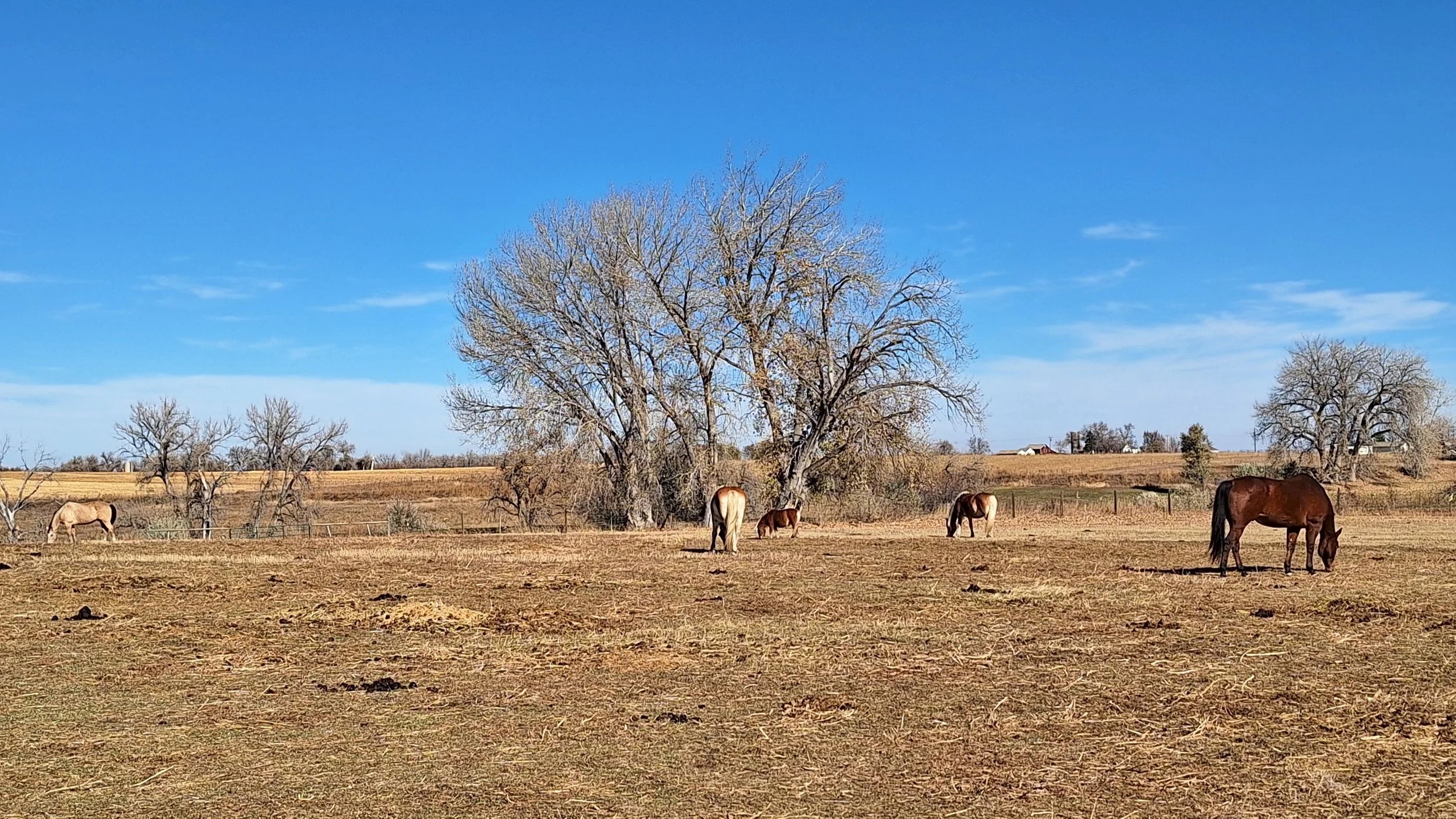
Horses are naturally attuned to the environment, which means they can instantly tell how we feel inside, even when we are trying hard to hide. If you show up feeling stressed but acting calm, the horse notices that mismatch immediately and changes their behavior. This is the starting point of our work. We set up situations like leading a horse, brushing a horse, meeting a new horse that may match themes that you want to work on. By observing the horse i am able to wonder what is happening in the moment and build a parallel with your life situations. For example, when leading a horse, the horse stops which is a way to say "no". The similar situation in life is someone saying "no" to us and how it feels inside when it happens.
Why horses →